
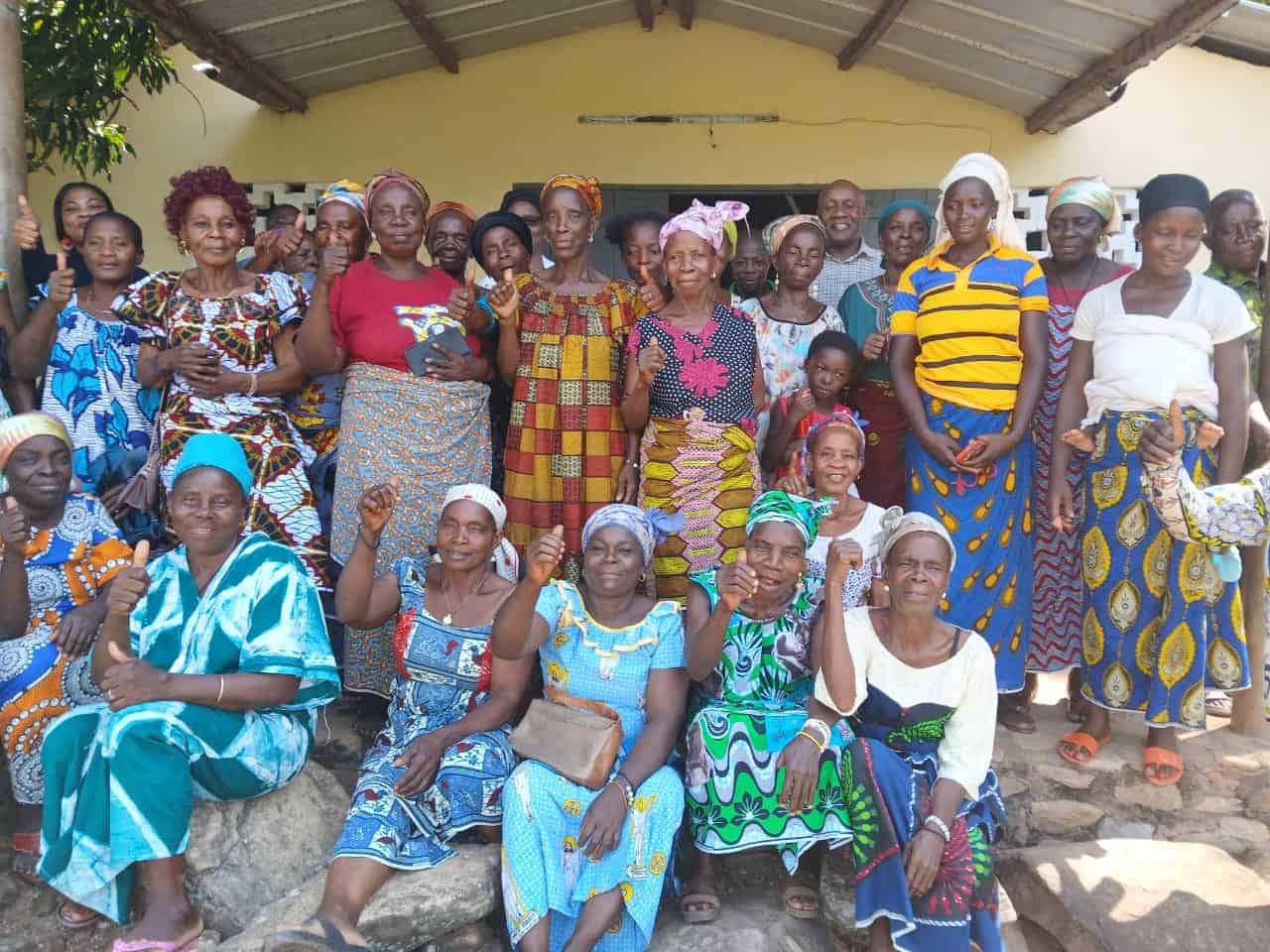
One of the highlights of my recent visit to Côte d’Ivoire was spending time with our partner, Caritas Man, and savings groups in the communities where we are preparing to deliver economic inclusion programming together. The women we met were already saving, borrowing, and investing in their livelihoods, and spoke openly about the challenges they faced—in particular, finding better markets and accessing equipment to process their produce.
What stayed with me was how much there was to build on. The women had clear ideas about what needed to change and were already taking steps to improve their livelihoods. We are joining communities with their own experience, relationships, and institutions, and thus our work needs to start with understanding and respecting those foundations.
For me, strengthening local systems means listening carefully and helping local institutions turn community priorities into practical support. It also means looking beyond the groups we meet and asking who is still being left out. That is the opportunity I see in our partnership with Caritas Man.
Starting with Relationships That Already Exist
Faith-based organizations deserve greater attention in conversations about economic inclusion. In many communities, they have been present for generations. They know families, bring people together, and support communities through difficult times. Their relationships often continue long after an individual project ends.
Caritas Man already helps community groups organize, strengthen their savings practices, and connect with services. Its experience and established role in community life make it a promising partner. Through this partnership, we have an opportunity to build on that work while investing in Caritas Man’s capacity to lead.
Our planned pilot will support approximately 100 women through Trickle Up’s Graduation approach. Women will receive support to build their livelihoods, develop practical skills, and save, alongside regular coaching. Community coaches, supported by digital tools, will work alongside them as they put their plans into practice.
The quality of that relationship matters enormously. A woman needs to feel comfortable telling her coach that her business is struggling or that pressure at home is making it difficult to continue. She needs to trust that someone will listen and help her work through the problem. Caritas Man’s existing community relationships give us a foundation for building that trust and an opportunity to learn how it influences women’s participation.
We also have to look beyond the people an institution already knows. Some women cannot afford to join a savings group. Others face barriers linked to disability, isolation, or responsibilities at home. If we rely entirely on existing groups, we risk missing the very women we want to reach. Their circumstances must shape how participants are identified and supported, and assistance must be accessible regardless of religious affiliation.
Helping Institutions Work Together Around Women’s Priorities
The challenges women described during our visit show why these wider relationships matter. Coaching can help a woman plan her business, and access to a buyer or processing equipment may determine whether that plan succeeds. Additionally, groups need support to manage disagreements and protect the resources they have worked so hard to build.
Caritas Man can help identify these needs and connect women and their savings groups with others who can respond. This is an important part of a faith-based organization’s contribution to the wider local system: bringing community priorities into conversations with government services, financial institutions, and businesses.
Our meetings with government teams in Abidjan reinforced the potential for these connections. I was encouraged by the interest in economic inclusion and the opportunities to link the pilot with public programs, financial education, and support for women’s livelihoods. Realizing that potential will require clear agreements on who is responsible for what, as well as follow-through to ensure these connections deliver practical benefits for women.
Government has a central role to play in advancing economic inclusion. Local institutions can help connect public programs with the realities women face in their communities, highlighting where support is falling short. Women themselves must also have a voice in these discussions, so their experiences and priorities inform the decisions made about their livelihoods.
Giving Local Partners the Support and Room to Lead
Strong local ownership requires more than asking local partners to take responsibility—it means investing in the people and systems that enable them to lead effectively. Coaches need training and supervision, including someone to turn to when a problem goes beyond their experience. Caritas Man needs adequate staffing and reliable information to track women’s progress and respond when additional support is needed.
Community commitment is a tremendous asset, but it must be matched with realistic budgets and sustained support. Our partnership should leave Caritas Man better equipped to deliver this work and apply what it learns in its broader engagement with communities.
This also requires Trickle Up to be willing to adapt. We bring experience in the Graduation approach, but we need to listen when Caritas Man tells us that an approach does not fit the context. Women’s feedback must carry enough weight to change how we work. If a local organization is taking responsibility for delivery, it should also have meaningful influence over the program’s design and the resources needed to implement it.
Learning That Helps Us Improve the Work
We are developing a research and learning agenda with Innovations for Poverty Action and Caritas to better understand how this partnership works in practice. We want to explore whether existing community relationships help women engage with coaching, who benefits from those relationships, and who may still be excluded.
We also want to understand what coaches need in order to provide consistent support and what enables Caritas Man respond quickly when difficulties arise. By examining both the partnership’s strengths and its limitations, we can use what we learn to improve implementation while the pilot is underway.
With a small pilot, our immediate priority is to strengthen delivery and make informed decisions about what comes next. Questions remain: How can faith-based organizations contribute to government-led economic inclusion? Under what conditions can they do so effectively? Our experience in Man will help us identify what might be adapted across the wider Caritas network and where further learning is needed.
I left Man encouraged by the women we met and the commitment of our Caritas colleagues. Ultimately, success will mean women earning more from their livelihoods and feeling more confident in their decisions. It will also mean stronger local institutions with the capacity and resources to sustain that progress.
For the women we met, a stronger local system should make a tangible difference: a coach they can speak openly with, a savings group that works well, and meaningful connections to services and markets. That is the standard I want us to hold ourselves to as this partnership grows.