
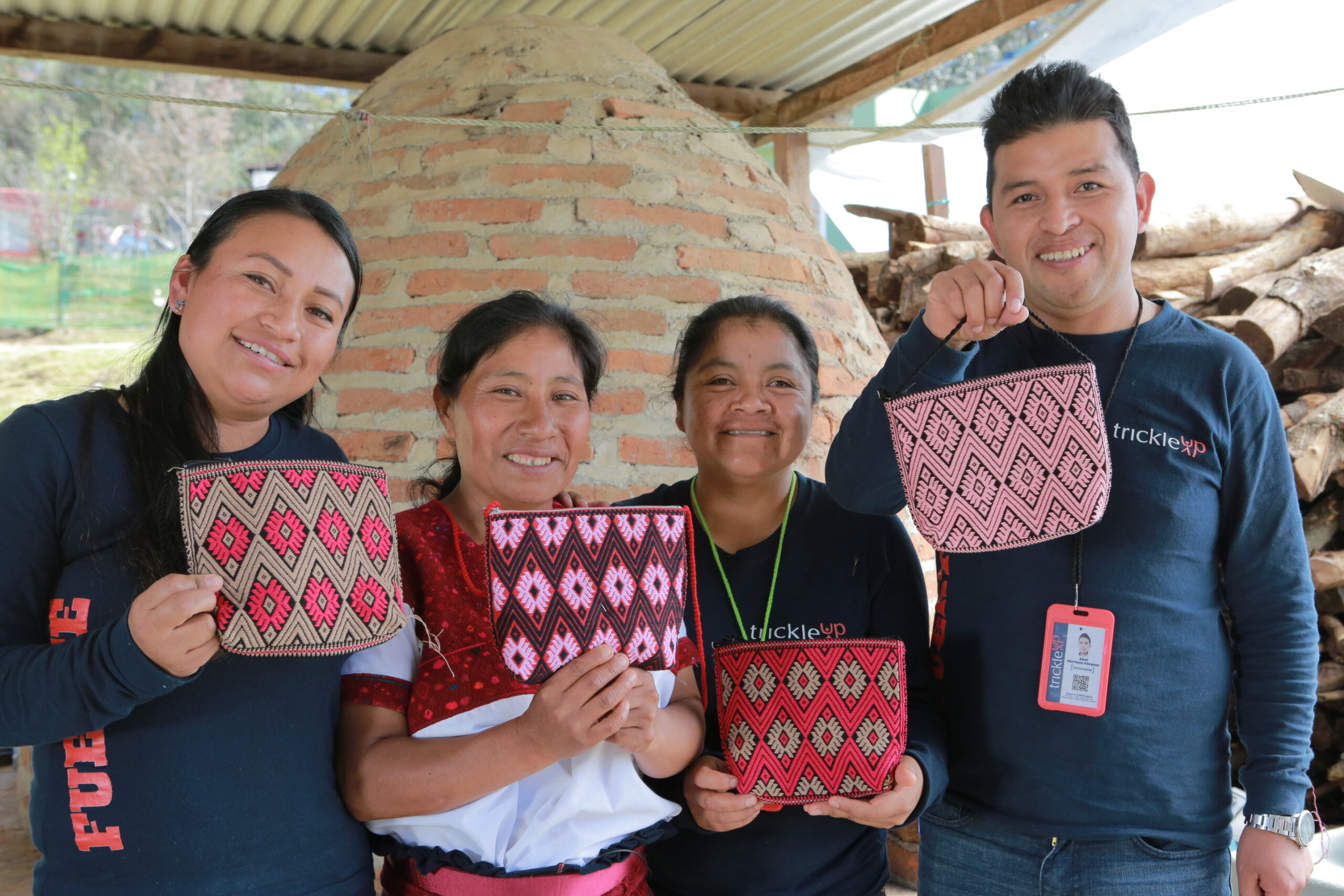
In the rural areas of Chiapas and Oaxaca, opportunity is scarce—especially for women. Fewer than 3 in 10 women have access to formal financial services, locking them out of critical tools needed to invest and grow. These regions face the highest rates of extreme poverty in Mexico, where families rely on the informal economy, subsistence agriculture, and local commerce to get by. Persistent gender inequality heavily impacts women, who perform a high burden of unpaid work and face steep barriers to accessing credit, training, and autonomy, each proving to be a significant hurdle on the road to women’s empowerment.
Trickle Up’s FUERTE project, funded by MetLife Foundation, set out to change that by partnering with over 6,000 women living in extreme poverty to develop livelihood enterprises. At the start, most participants earned less than $50 a month and had no savings. Through FUERTE, about two-thirds of the women received seed capital and started a business from scratch—and many of their businesses proved to be resounding successes. By the end of the project, every single woman had started saving, and altogether, the women accumulated a total savings of over 14 million pesos.
The key to FUERTE’s success was a multidisciplinary approach that combined seed capital, coaching, business training, and savings groups—designed to build not just income, but confidence, self-esteem, autonomy, and community.
Safe Spaces, Strong Voices: The Ripple Effect of Savings Groups
Across Chiapas and Oaxaca, FUERTE launched 240 savings groups that became safe spaces for women to build financial literacy, share knowledge, and support each other. Together, they built social funds for emergency situations, made collective decisions, and acted on social and economic issues that affected them.
The case for savings groups is clear: promoting financial inclusion from the community level gives women the trust and confidence to become more vocal and visible in their communities. In the case of the FUERTE project, 22% of its participants grew to hold some type of position or assumed responsibilities in their community.
Resilience, On Their Own Terms
The women of the FUERTE project proved themselves to be adaptable and enterprising, taking initiative in planning and diversifying their income-generating activities. Each woman selected a livelihood enterprise based on her own unique skills, interests, and knowledge of her community’s needs. This autonomy in choice not only fostered a stronger sense of ownership, but also deepened each woman’s commitment to her personal and family goals.
As the project progressed, the women continued to adapt and innovate. One participant, for example, initially sold prepared food, but later used her seed capital to pursue a new path—becoming a motorcycle mechanic. Recognizing a gap in her community, she opened a repair shop, which is now thriving. Others expanded their food businesses by incorporating specialty items like pastries and cakes. With growing confidence, many began selling in neighboring towns and reached new markets online through WhatsApp, increasing their customer base and income.
A Foundation for Women’s Empowerment
The FUERTE project’s impact wasn’t just economic. It demonstrated that amplifying women’s voices, choices, and power can transform households and communities. At the start of the project, 76% of the participants reported that they made their own healthcare decisions—but that number rose to 87% by the end of the project. Similarly, the proportion of women who decided how to use their own income rose from 77% to 84%, and women who felt their opinion was considered in household decisions increased from 75% to 85%.
The FUERTE project is a testament to what’s possible when women are equipped with resources, knowledge, and given the space to lead. What began as a financial inclusion initiative grew into something much deeper: a movement of women reshaping the economic and social fabric of their communities.
Long after the program’s end, 88% of participants remain active in their savings groups, and 82% of the businesses started with seed capital are still operating—proof that this wasn’t just a project, it was the beginning of something lasting.
—————