
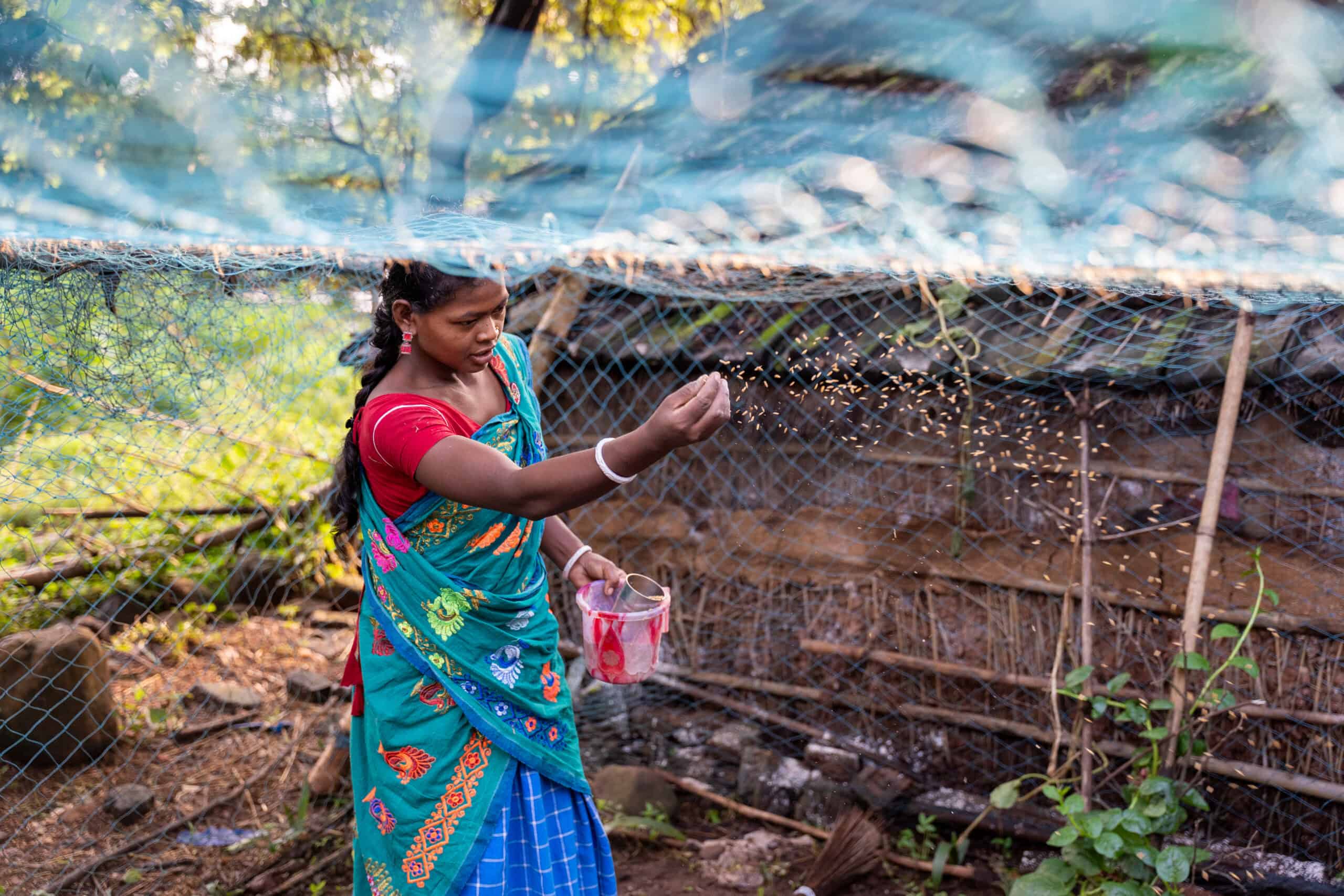
Economic development is often discussed at the level of cities, markets, and industries. But in low-income urban communities, economic resilience is rarely built at those scales. Instead, it begins at the household level.
In densely populated areas of Kolkata where informal work dominates daily life, economic activity is often fragmented. Women run small food stalls, tailoring services, and micro-enterprises that sustain entire households but rarely operate with the stability or structure of formal businesses.
Yet, Trickle Up’s WINGS project has demonstrated that strengthening household-level enterprises can be a powerful entry point for urban economic inclusion.
The Household as an Economic Unit
For many families, income from small enterprises directly supports food security, children’s education, healthcare, and housing costs. When income is unstable, the entire household becomes economically vulnerable, making household-level strengthening critical.
Across WINGS participants, a consistent pattern emerged: informal activity became a structured business, irregular income became planned income, and reactive spending became managed finance.
These changes don’t happen automatically when an economic inclusion program begins its work. Instead, these changes are rooted in training and continued support over the course of months or years. Entrepreneurship development and financial literacy training play a key role in this transition by helping participants understand pricing, cost structures, profit management, and reinvestment strategies.
While support is often directed at individual female entrepreneurs in Trickle Up’s programs, the impact of these small businesses extends across their households. Increased income and improved financial management lead to better household decision-making, greater financial stability, improved ability to respond to shocks, and increased investment in children’s wellbeing, creating a cycle of resilience.
The Role of Systems and Collaboration
Recent consortium-building efforts under WINGS highlight another critical insight: Household-level change requires ecosystem-level coordination. No single organization can address skills, markets, financial inclusion, livelihood support, and social protection at scale and in isolation.
The consortium approach reflects a shift toward integrated urban poverty programming, where multiple actors contribute to different parts of the same household ecosystem. Rebuilding economies in urban informal settlements begins directly with households that are able to manage and grow their income more effectively. When households become stronger economic units, cities become more resilient from the ground up.