
Earlier this year, the United Nations High Commissioner for Refugees (UNHCR) reported that more than 122 million people worldwide have been forcibly displaced by conflict, persecution, or violence. Of these, millions have crossed borders as refugees, while others remain uprooted within their own countries.
Behind these numbers are lives interrupted, families separated, and communities uprooted. Most displaced people are hosted in low- and middle-income countries already grappling with limited resources. And even as humanitarian needs expand, global aid budgets continue to shrink, leaving millions at risk of losing access to food, shelter, and education.
The question is not whether emergency aid is necessary; it is. The real question is: what comes next? How do we ensure that refugees have the tools to rebuild their lives with dignity, rather than remaining trapped in cycles of dependency?
Uganda: A Leader Under Pressure
Uganda offers both inspiration and caution. Hosting nearly two million refugees, it is Africa’s largest host country and among the top three worldwide. Most have fled ongoing violence in South Sudan and the Democratic Republic of Congo, with many new arrivals this year from Sudan.
Uganda’s approach is widely praised. Unlike many countries, it grants refugees the right to work, cultivate land, and access public services. This progressive framework has helped countless families begin to recover. But the strain is undeniable. Thousands of people continue to arrive each month, and aid budgets have not kept pace. The World Food Programme was forced to reduce food rations in 2025, leaving many families with less than half of what they need. Malnutrition is rising, and pressure on schools, clinics, and water systems grows heavier every day.
Uganda’s experience underscores a larger truth: generosity alone cannot sustain such an enormous responsibility. New models are urgently needed, ones that go beyond short-term relief to build lasting resilience.
Grace’s Story: From Aid to Agency
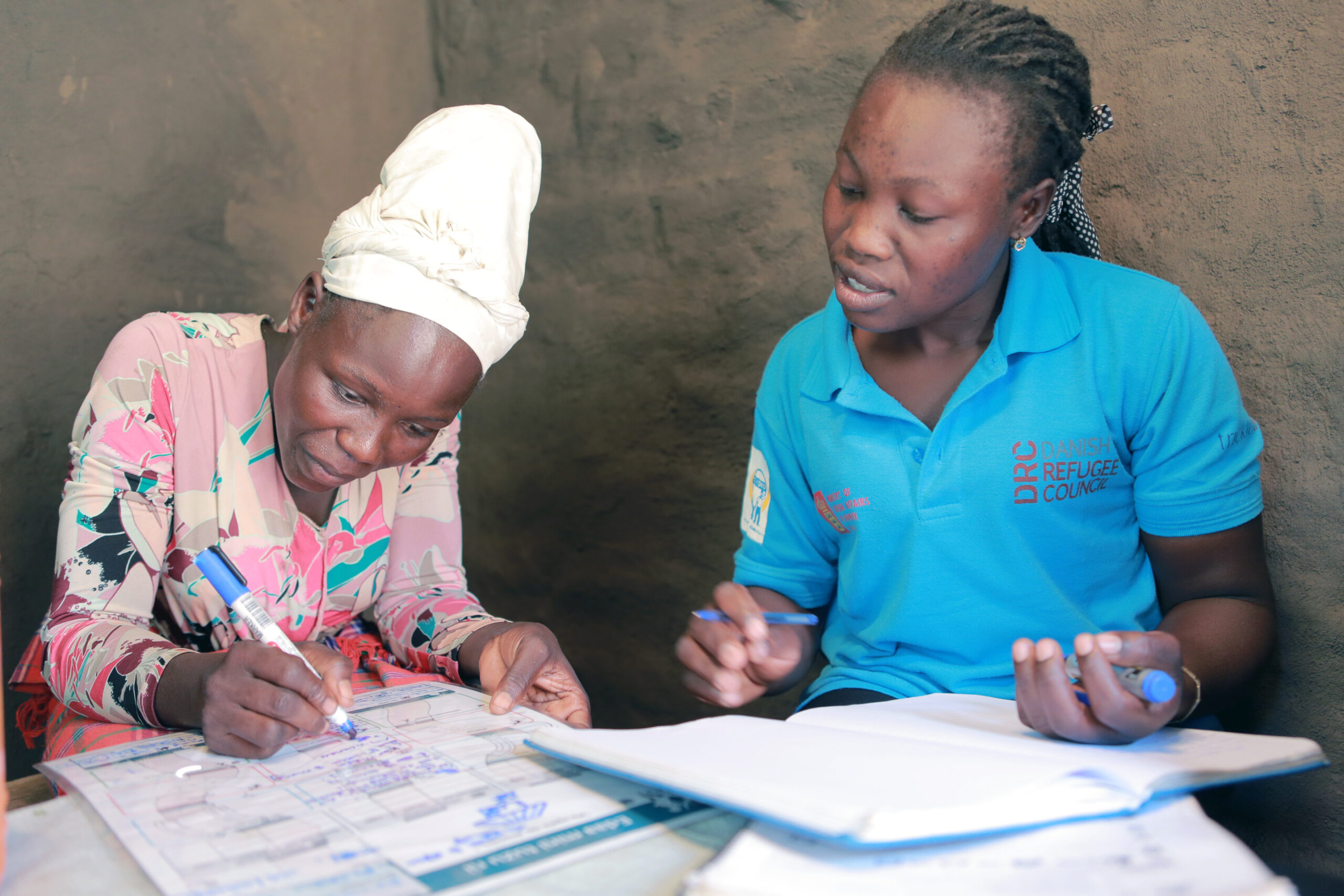
For Grace, a refugee from the Democratic Republic of Congo now living in Kamwenge District, the early days in Uganda were filled with uncertainty. “We had nothing,” she recalls. “Even feeding the family once a day was difficult.”
Her turning point came when she joined the Graduating to Resilience project, led by the AVSI Foundation with support from USAID and technical assistance from Trickle Up. The program didn’t just hand out one-time aid. Instead, Grace received a modest grant to start raising chickens, regular coaching to help her manage her household, and the chance to join a savings group. She also learned how to use mobile money for transactions; a small but powerful step toward financial independence.
Slowly, things began to change. With her poultry income, she was able to buy school supplies and send her children back to class. Joining a savings group gave her both security and confidence. “I don’t wait for aid anymore,” she says. “I now know how to provide for my family.”
Grace’s story reflects what thousands of refugee and host households in Uganda experienced through this approach: a shift from mere survival to agency and hope.
Why This Approach Works
What makes graduation-style programs different is how carefully they combine relief and development. Families start with immediate support—small cash transfers or food assistance—so they can stabilize. Then they receive tools to build livelihoods: training, assets, coaching, and access to savings. Finally, they are connected to longer-term opportunities like markets, mobile money, and community networks.
This sequenced support matters. A family that is hungry today cannot invest in tomorrow. But once their most urgent needs are met, they can begin to save, diversify their income, and plan for the future. Coaching ensures that families stay motivated and supported through setbacks, while participation in savings groups and community activities builds both confidence and cohesion.
Unlike traditional aid, which often ends when budgets run out, graduation programs leave behind stronger households and stronger communities. Refugees and hosts alike gain the skills, assets, and networks needed to continue thriving after the program ends.
A Smarter Investment
Evidence shows that these programs are not only effective, but cost-efficient. Evaluations in Uganda and Kenya found that participants enjoyed lasting gains in income and food security, often with returns many times greater than the initial investment. For governments and donors facing limited budgets, this matters. Graduation programs stretch each dollar further by reducing long-term dependence on aid.
Equally important, they align with national strategies. Uganda’s ReHoPE framework is designed to link humanitarian relief with long-term development, and projects like Graduating to Resilience show how that vision can work in practice. By embedding these models within national systems, governments and partners can reach more people, more sustainably.
From Survival to Opportunity
Refugees are not defined solely by their losses. They are entrepreneurs, parents, leaders, and problem-solvers who, when given the right tools, can transform their futures. Programs like Graduating to Resilience remind us that economic inclusion is not just possible, it is essential.
At a time when humanitarian budgets are shrinking while displacement is at historic highs, we must do more than keep people alive. We must give them the chance to live with dignity and build a future.
Grace’s words capture this shift best: “I now know how to provide for my family.” That is the power of inclusion, and the kind of outcome the world should be investing in.
—————